5 Shots
Not so long ago I came across the wonderful site 5 Shots.
We publish interviews with professionals in design and IT: designers, illustrators, technologists, studio art directors, startup owners, and so on.
The special feature of the interviews is the constraint: we ask everyone the same five questions. Five questions, like five shot drinks: short, to the point, and unobtrusive. The questions are the kind you always want to ask a professional in a chance meeting: advice, tools, books. We deliberately did not invent anything overcomplicated.
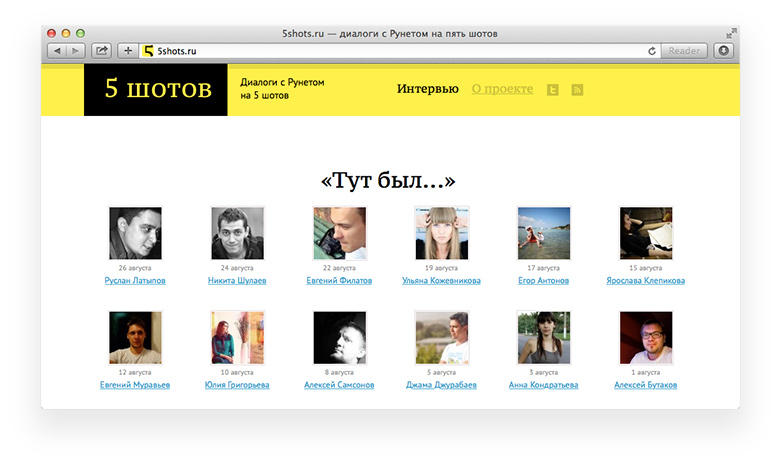
Unfortunately, the site is no longer updated. There are now 79 interviews there, which I read as if they were a book, one after another. It was especially nice to read about people I know personally.
My "5 Shots". Stas Raskumandrin
A Perl programmer with a beard.

A Few Words About Myself
My name is Stanislav. I make a living as a freelancer and mostly as a Perl programmer. For the last two years, while it is warm, my beloved wife and I live in Saint Petersburg; when it is cold, in Thailand.
I got acquainted with Perl about five years ago. Over that time I have grown very fond of it for its freedom and power.
Your Toolkit
Mac, TextMate, Terminal, paper and pencil. I am already planning to replace TextMate with vim any moment now.

A Project You Are Proud Of
I am proud of all projects that do not require support and continue to work for several years after the development cycle is complete. Among the recent ones, perhaps, it is the stretch-ceiling price calculator.
A Book Everyone in Your Field Should Read
Perl is a language designed for text processing. Processing textual information is unthinkable without using regular expressions. I believe the must-read book for a Perl programmer is Jeffrey Friedl's Regular Expressions.
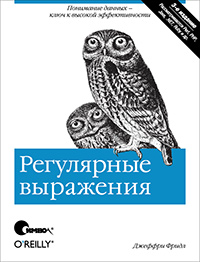
Of course, since we are talking about a Perl programmer, the books Programming Perl, Learning Perl, Intermediate Perl are considered read by default.
Among other things, I believe one should definitely deal with PDF versions of books, especially programming books. On the one hand, they all fit on a tablet, which you can take with you or put on the desk next to the computer. On the other hand, once read, they are convenient later for searching for something specific and for copying pieces of code.
Professional Advice to Colleagues
Write code that is easy for someone other than the author to maintain. Do not forget comments. Even for tiny projects, use a version control system.