White Sea Petroglyphs
The White Sea petroglyphs are a monument from the 5th-6th millennium BCE, consisting of rock carvings and more than thirty ancient human settlement sites. The word "petroglyph" comes from Ancient Greek πέτρος - stone and γλυφή - carving. Traditionally, all images on stone from ancient times (the Paleolithic) up to the Middle Ages are called petroglyphs, except for those that reliably contain a well-developed system of signs.
Route
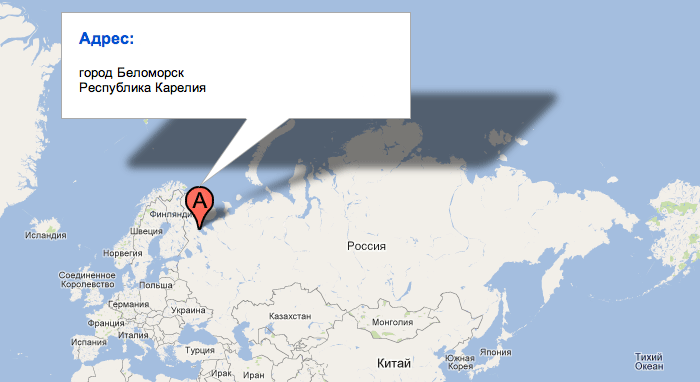
From Saint Petersburg, you can make the trip in a single weekend - see the petroglyphs and visit the White Sea. The White Sea petroglyphs are located in Zalavruga, by the Vyg River, about 10 km from the town of Belomorsk, near the village of Vygostrov.
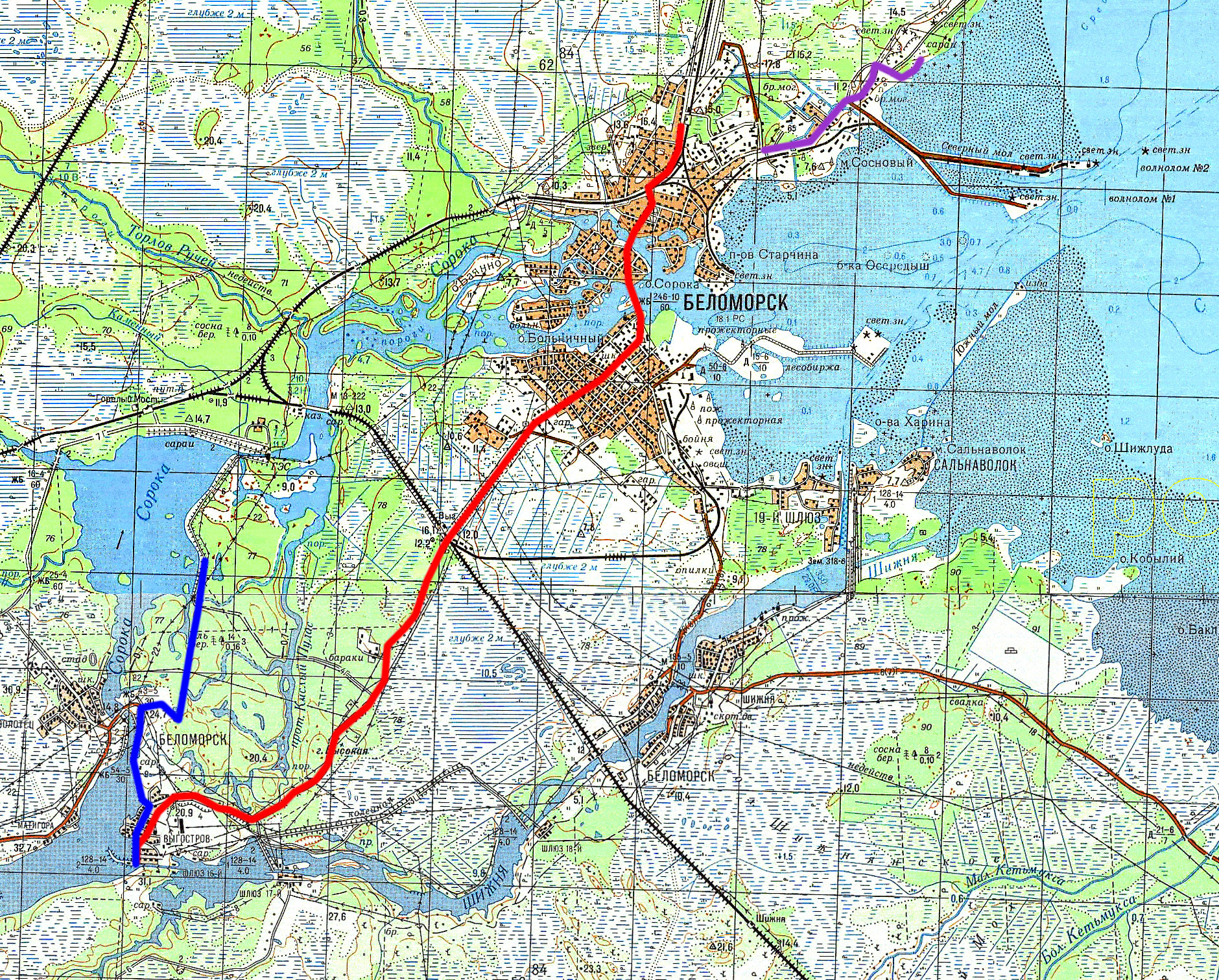
The image link contains a high-resolution map of the White Sea petroglyphs. Each grid square is 1 kilometer. And here is the map without our route. As usual, we take topographic maps from poehali.org. By the way, it turned out to be convenient to print them on photo paper - just right for hiking; for example at netprint.ru.

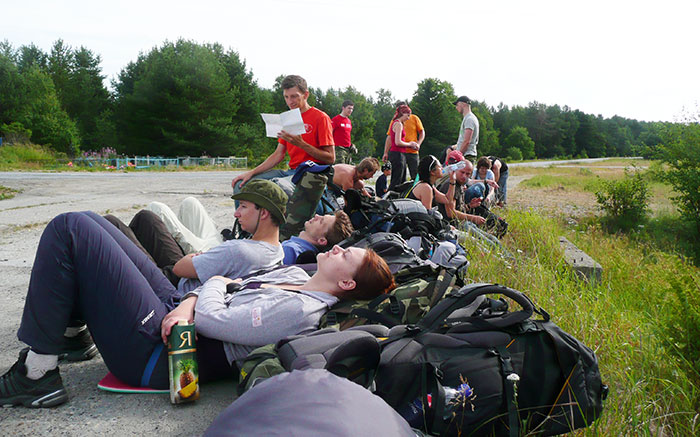
After arriving in Belomorsk, we walked to the White Sea-Baltic Canal (red line). Carrying a backpack felt hard without being used to it. One of the long-awaited rest stops along the way.
After looking at the lock on the White Sea-Baltic Canal, we headed toward the petroglyphs (the blue line on the map).
The most important petroglyph, "Besovy Sledki," has been conserved. You cannot see it on the stone - only in pictures and on souvenirs.
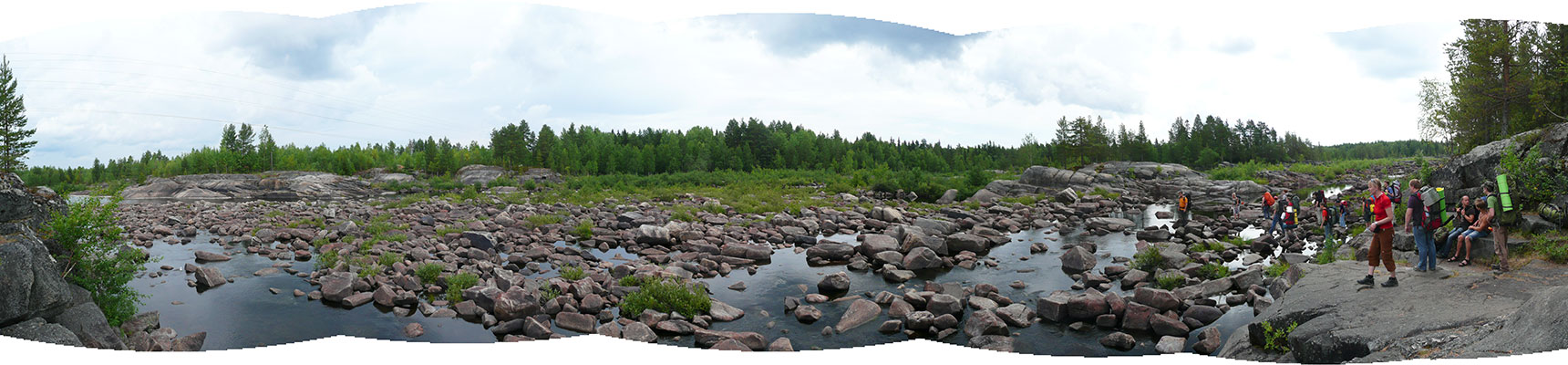
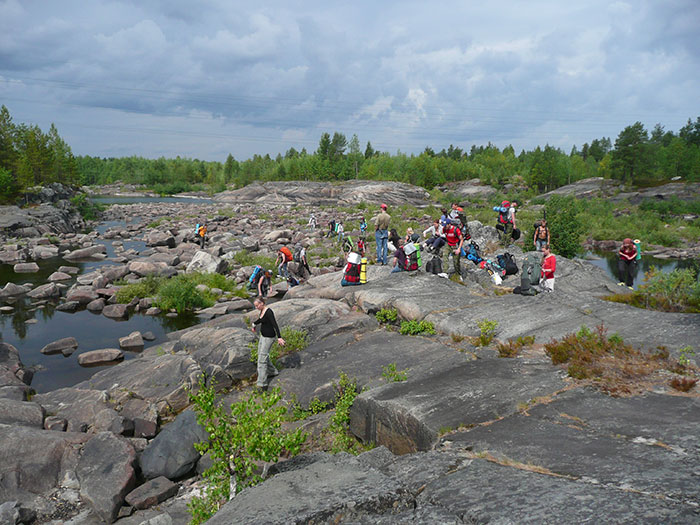
Crossing the stream.
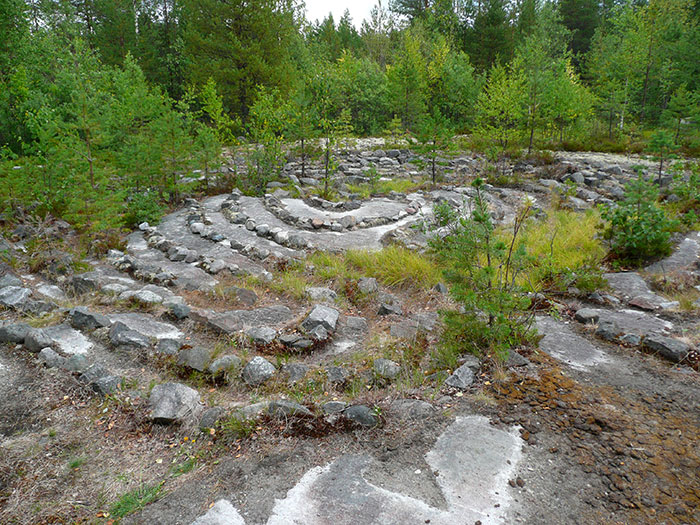
The labyrinth is a man-made structure created by the ancient inhabitants of Pomorye. It is located on a flat grassy site and has the shape of an almost regular circle with a diameter of 10-12 meters. Its winding walls are made of small rounded stones laid in a single row in width and height. And in the tall grass, the labyrinth becomes visible only when you come very close to it. Between its walls are winding, looping passages 10-15 centimeters wide. In the center of the labyrinth, the walls form an arc-shaped, looping passage along which one can move endlessly.
The ancient meaning of the labyrinths has long been lost from folk memory.
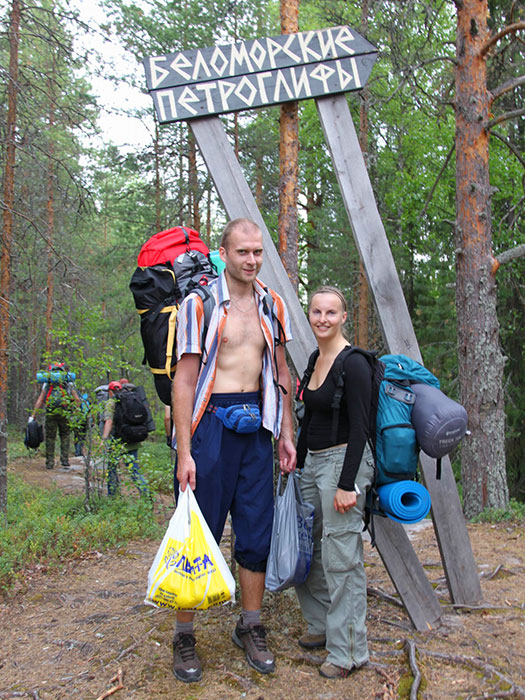
Petroglyphs
We were given a tour on the rocks, which used to be an island. The place is called Zalavruga.
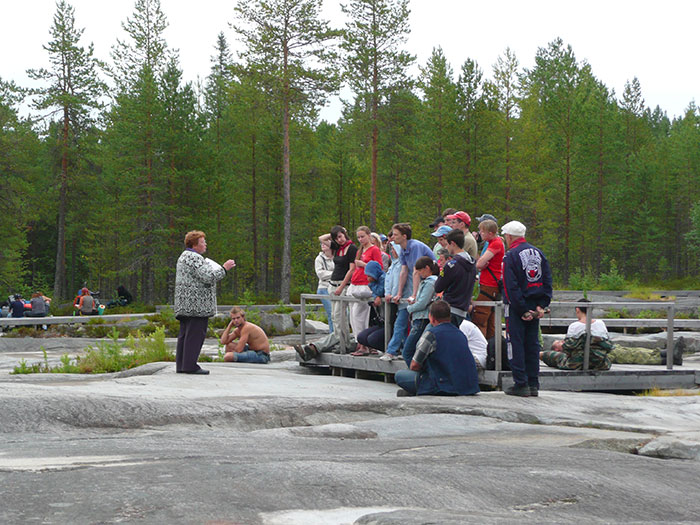
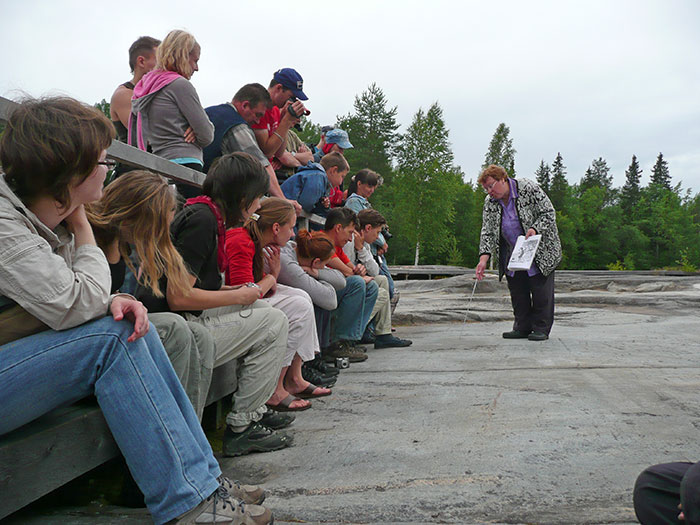
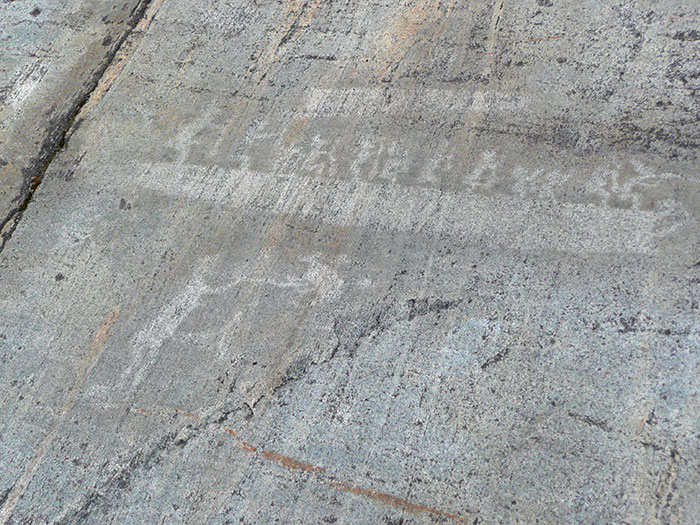
On the main central rock there are three enormous life-size deer walking one after another, and a chain of boats with rowers positioned under their feet as if blocking their path. This depicts the autumn hunt for deer crossing the river during their migration from north to south. If you look closely, you can see that the action takes place in different seasons: in one scene, with boats on open water; in another, with skis. Perhaps both scenes are dedicated to deer hunting at different times of year. There is also a theme of war - a battle with invading seafarers.
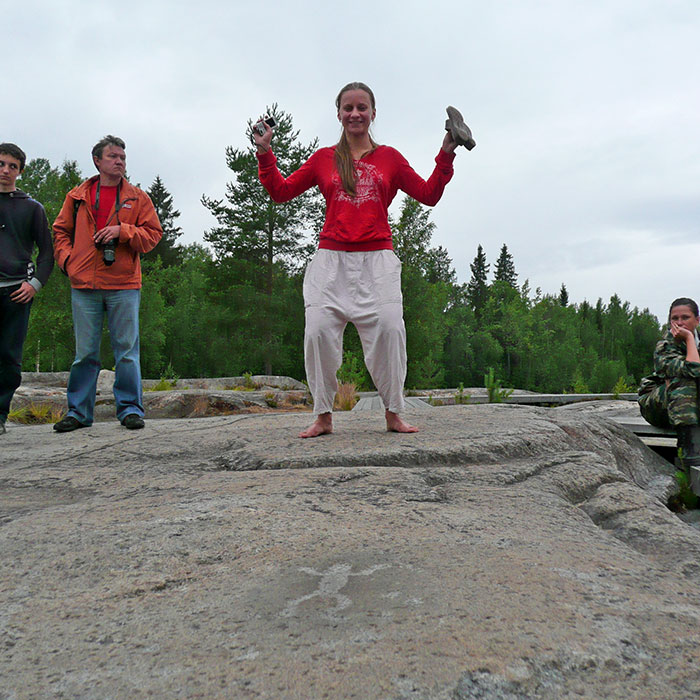
The tour was a little tiring after the morning hike.
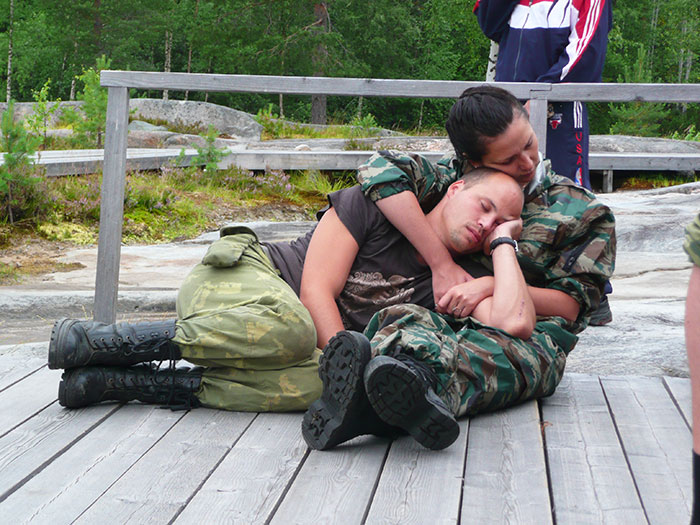
But not everyone was bored.
The White Sea and the Road Back
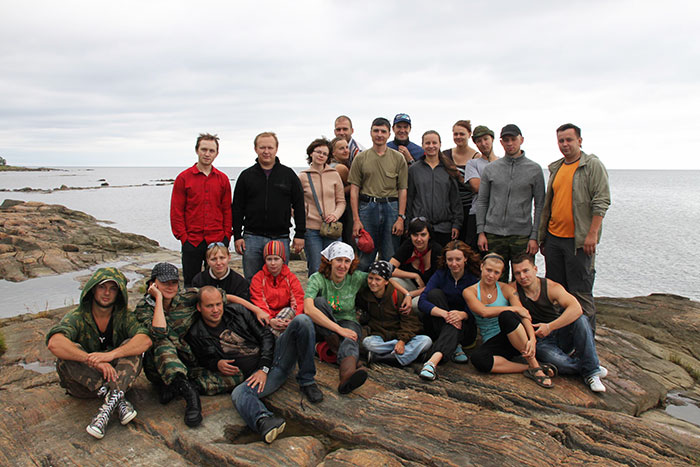
We set up camp on the coast of the White Sea. From the petroglyphs we were taken by bus, then walked a little (the purple line on the map).
Here is our whole group.
The next day we took a train to Petrozavodsk.
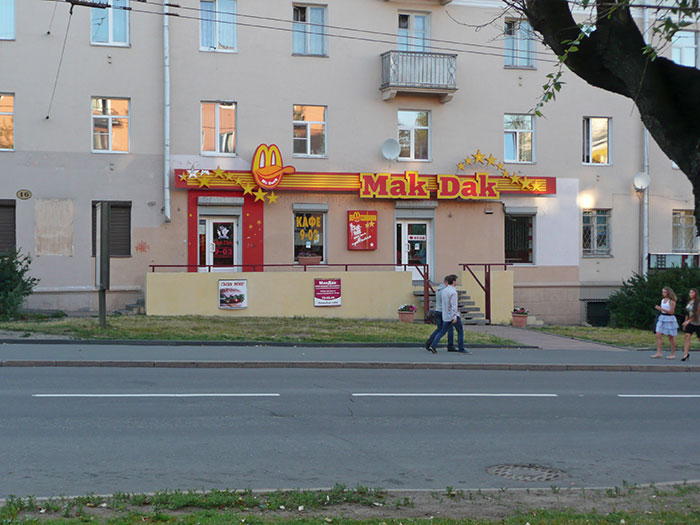
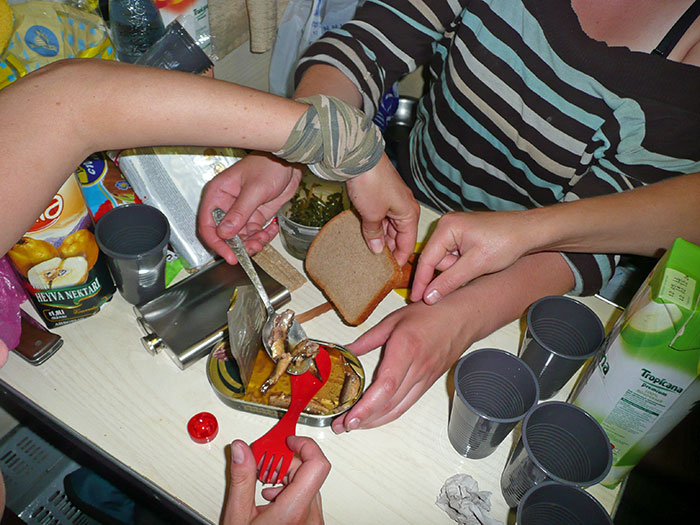
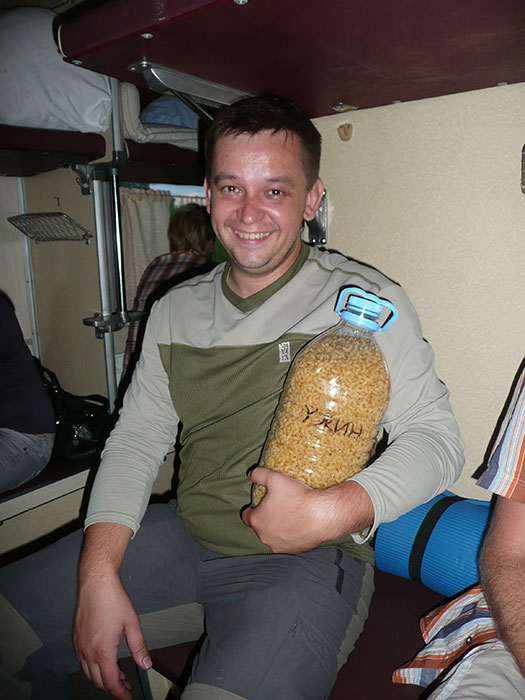
From Petrozavodsk there was already a train to Saint Petersburg. Sprats with vodka and bread. Mmm.
I want to thank Dima, who organized the whole thing - everything turned out great, interesting, and fun. Thank you.
Many photos from this trip were published on VKontakte:
vkontakte.ru/album-10243393_139015396.