books.ru
It so happened that recently I bought a bunch of different books from the online store books.ru (they turned out to be cheapest there). And I decided to write my comments on the books here, rather than on the bookstore's website.
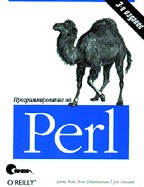
Programming Perl (3rd edition)
This book was where my acquaintance with Perl began, and also my acquaintance with translated books from O'Reilly.
Some chapters of the book were written by Larry Wall, the creator of Perl. There are constant explanations of why certain things in the language were made exactly this way and not otherwise. The whole narrative is filled with ironic remarks and wordplay. But perhaps the book's main achievement is that it is written simply.
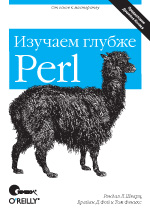
Intermediate Perl, 2nd edition
This one gives an excellent description of techniques for working with complex data structures. The treatment of this subject is more detailed than in the previous book, with many examples and a look at things from different angles.

Regular Expressions, 3rd edition
An incredibly well-developed, consistent presentation of not entirely consistent things - an amazing book.
TCP/IP Network Administration, 3rd edition
Not read yet
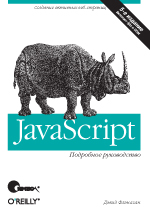
JavaScript: The Definitive Guide, 5th edition
The exposition is quite detailed. But the book is hard to read. The constant references like "this will be described later" are somewhat confusing.
Completely unlike the top book about Perl: "Since we begin small, our path through the following chapters will necessarily proceed from small to large. This means we have chosen a bottom-up principle. <...> If you prefer a top-down order, turn the book over and read it backwards. Each chapter builds on the material of the preceding chapter (or following one, if you are reading from the end)." Well... there I go advertising the first book again.
It is also worth noting that reading the book added another pile of minuses to Internet Explorer. Every ten pages or so you encounter something like: well, you see how simple it all is, yes? this behavior is supported by all browsers... except Internet Explorer, where it is implemented like this: ... (or not implemented at all).
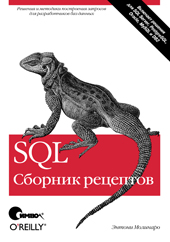
SQL Cookbook
It examines different solutions to various tasks for four DBMSs. Some of them are quite interesting.
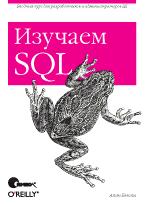
Learning SQL
Only the basics of SQL are covered. The book can be very useful as an introduction to SQL.
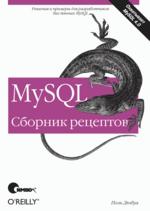
MySQL Cookbook
In addition to MySQL itself, it looks at its use in four languages - some of which are very much to the point.

Time Management for System Administrators
I did not actually buy this book at all. But I read it. Some things turned out to be useful. Even though I do not feel like a system administrator inside. A Mac user (and that is what I want to feel like) should be alien to system administration :)